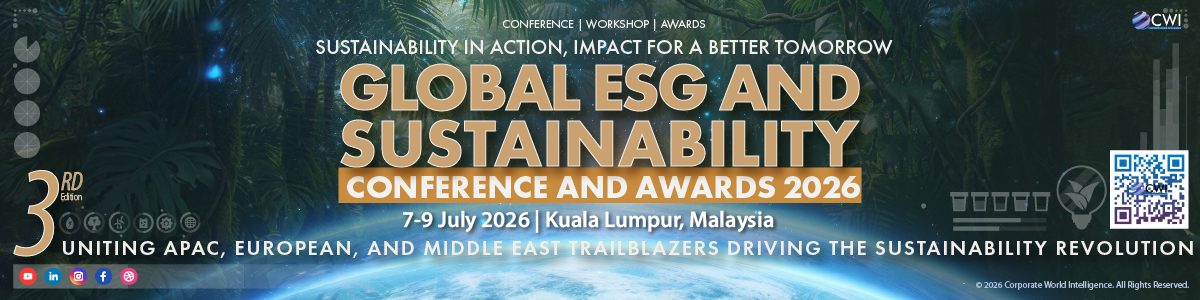

ESGMasthead_Email Banner

Function Rooms

Conference & Workshop

Podium 1, Level 7

Luncheon

Clover Restaurant, Level 1

Registration

Please register at the Corporate World Intelligence registration desk, where you will receive a lanyard upon signing in, which must be worn at all times during the conference. Registration is also required on Day 2 & Day 3.

Mobile Phones

As a courtesy to others in the conference room, please switch your mobile phones to silent mode during sessions.

Message

Any messages received for attendees will be announced before each break, and will be left at our Corporate World Intelligence registration desk for collection.

Access To Conference Documentation

All participants will receive a copy of the presentation slides/materials via email within 7 business days, upon approval. Please note that the documentation provided is copyrighted by the speakers and Corporate World Intelligence, and may not be reproduced in any form without prior written permission from either parties.

Belongings

Please remember to keep your personal belongings and conference materials with you at all times.

Tuesday 7th July 2026 - Day 1

8:00am

Registration and Morning Refreshments

8:45am

CWI Opening Remarks

9:00am

Navigating the Evolving Landscape of Global Sustainability Standards

  • Key Frameworks: ISSB standards, EU CSRD requirements, and emerging APAC regulations (Singapore, Malaysia guidelines).
  • Convergence vs Fragmentation: How global standards are harmonizing while regional differences persist.
  • Compliance Challenges: Data collection burdens, assurance requirements, and materiality assessments for SMEs.
  • Strategic Opportunities: Turning reporting into competitive advantage through investor appeal and risk management.
  • Technology Enablers: AI-driven reporting platforms and blockchain for supply chain verification.
  • APAC Context: Regional adoption timelines, cross-border alignment, and practical implementation roadmaps.

Farhana Jabir,
Director of Sustainability and Climate Change, PwC

9:40am

Enhancing Transparency to Combat Greenwashing: ESG Reporting and Accountability

  • Use of third-party ESG ratings and audits (e.g., Sustainalytics rankings of Ashok Leyland under the Hinduja Group) to build credibility beyond self-disclosure.
  • Shifting from broad sustainability messaging to measurable, verifiable KPIs, including product-level emissions and multi-year operational data, to eliminate vague or misleading claims.
  • Adopting standardized reporting frameworks (GRI, TCFD) to ensure consistency, comparability, and to minimize selective disclosure often associated with greenwashing practices.
  • Embedding ESG into core business strategy and capital allocation (e.g., EV investments, hydrogen mobility) to demonstrate genuine commitment, rather than superficial or marketing-driven sustainability initiatives.
  • Establishing board-level ESG governance and accountability structures to ensure oversight, challenge questionable claims, and prevent greenwashing at the highest decision-making level.
  • Transitioning toward continuous, transparent disclosure (e.g., real-time dashboards, ongoing data tracking) to move beyond static annual reports that can obscure or delay the truth.

Alok Vijayvergiya,
Group Chief Sustainability Officer, The Hinduja Group

10:20am

Case study: Achieving Carbon Neutrality: Frameworks and Strategies for Lasting Impact

  • A “thought experiment” case study for Australia to reach net zero by 2050.
  • This analysis is not intended to give a ‘precise’ answer on how to reach net-zero goals, but provides a contextual framework for the size and scale of the problem, and some practical insights on what needs to be done.
  • The analysis considers a decarbonization of electrical grids, and then decarbonization of the complete economy.
  • It provides some consideration of the role of green hydrogen / e-fuels, and some comment on these for domestic consumption vs international export.
  • The analysis provides some guidance for governments, industry players, and energy consumers on the practical implications of net-zero targets. 
  • How ongoing geopolitical conflicts and energy security pressures are reshaping decarbonisation and net-zero pathways, and responses are needed to adapt strategies in real time.
  • The unavoidable link between energy security and national security, and achieving sustainability targets delivers on domestic energy security.
  • The scale of investment required to achieve complete decarbonization (not just electricity, but the whole economy), is of the same order of magnitude many nations invest in their military.
  • The scale of infrastructure required is not just wind turbines and solar panels and switch gear, it’s steel and roadways and copper wire etc.
  • Manufacturing and construction of all of this is currently a constraint, and delivery on our goals requires coordination between governments, private industry, and international partners.

Matthew Cowper,
Head of Business Operations APAC, Siemens Energy

11:00am

Coffee Break

11:15am

Governance Innovations Addressing Emerging ESG Risks in Global Supply Chains

  • ESG risks embedded in global value chains—climate, human rights, nature and integrity—can no longer be delegated to sustainability teams. Mandatory disclosure and regulatory scrutiny mean boards and executives are directly accountable for oversight and outcomes.
  • Scope 3 emissions, labour practices, corruption and nature-related risks in tier-2 and tier-3 suppliers represent the largest unmanaged exposure for most organisations, particularly across complex APAC and ASEAN supply chains.
  • Policy-based compliance and periodic supplier audits are failing to capture real-world risk. Companies must shift to governance models that integrate ESG risk into enterprise risk management, capital allocation and core business decision-making.
  • Effective responses include clearer board ownership of supply-chain ESG risk, cross-functional accountability across procurement, finance and legal teams, and board-owned transition plans that align sustainability commitments with operational reality.
  • No company can address complex ESG risks alone. Pre-competitive collaboration, industry platforms and UN-aligned initiatives are increasingly critical to improving leverage, reducing costs and delivering credible, scalable impact across global supply chains.

Kate Dundas,
Executive Director, UN Global Compact Network Australia

11:55am

Scope 3 Emissions: Approach, Management and Reporting

  • Approach: Supply Chain Engagement and climate related procurement strategies.
  • Management: Engagement Program to map, assess and measure GHG emission. 
  • Measurement methods: Spend-Based, supplier-specific, hybrid approaches.
  • Management: Supply chain decarbonization which includes circularity & low Carbon Sourcing.
  • Tools & standards: GHG Protocol, SBTi Scope 3 Guidance.
  • Reporting: Challenges & Data gaps.

Dr. Surina Ismail,
Chief Sustainability Officer, Group Sustainability, IOI Corporation Berhad

12:35pm

Lunch Break

13:35pm

Panel Session

Advancing ESG Transparency in APAC: Leveraging Technology to Build Trust and Compliance

This panel would focus on the evolving ESG reporting standards and regulatory landscape in APAC and ASEAN, exploring how companies in the region can adopt digital tools like AI and blockchain to improve reporting accuracy, prevent greenwashing, and meet increasing stakeholder expectations. It would also discuss regional collaborations and best practices to drive greater transparency and investment confidence.

Moderator:

Stefanie Braukmann,
Director, BCSD Malaysia

Panelists:

Joanna Chen,
Director of Sustainability Operations (APAC Lead), JLL

Roy Heong,
Chief Sustainability Officer, Alliance Bank Malaysia Berhad
Philip Ling, 
Head of Sustainability, CelcomDigi Berhad Malaysia
Eleen Ooi Yi Ling,
Sustainability Practitioner, Former Head of Sustainability, Dutch Lady Milk Industries and AVP Group Sustainability, Bursa Malaysia

14:15pm

Case study: Advances in Renewable Energy: Accelerating the Global Energy Transition 

  • Global context of energy transition.
  • Indonesia’s Energy Transition Framework (RUKN as national policy).
  • National Electricity Planning (RUPTL) 2025–2034: Indonesia’s Implementation Roadmap.
  • Advances in Renewable Energy Technologies (Indonesia Context).
  • Power System Transformation: Smart Grid as an Enabler.
  • Investment and Collaboration Model.
  • Key Challenges and Mitigation Strategies.
  • Role of Knowledge Institutions and Applied Research.
  • Key Takeaways from Indonesia’s Case.

Warsono,
Director of the Applied Solutions Center, Technology Institute of PLN

14:55pm

Sustainable Finance: Unlocking Capital for Energy and Resource Transitions

  • Green & transition bonds: Rapid issuance growth, performance incentives​.
  • ESG integration: Mainstream adoption, impact investing rise​.
  • Transition finance: Decarbonizing high-emission sectors​.
  • Energy credits: Corporate funding for clean infrastructure​.
  • Bankability tools: Scaling net-zero project finance​.
  • Capital needs: Bridging gaps in energy & nature shifts.

Ashraf Gomma Ali,
Group Chief Shariah and Sustainability Officer, MBSB Berhad

15:35pm

Coffee Break

15:50pm

AI and Digital Transformation: Empowering ESG Across Every Organization

  • Unveils how Artificial Intelligence (AI), as the engine of modern digital transformation, is revolutionizing ESG from a burden to a powerhouse of insight, efficiency, and value creation.
  • Move beyond theory to explore practical use cases where AI is already driving tangible ESG outcomes—optimizing energy use, ensuring ethical supply chains, enhancing diversity, and uncovering material risks and opportunities.
  • Discover how to leverage these technologies to build a more resilient, responsible, and competitive organization.

Dato’ Dr. Munirah Looi,
Regional CEO-SEA, BLUEONION

16:30pm

Case Study: Critical Infrastructure and the Just Transition to a Low-Carbon Economy

  • Narrowing the Digital Divide: Risks and Opportunities.
  • Addressing present day risks: Geopolitical, triple planetary crisis, developments in the workplace business environment (AI, intergenerational workforce, digitalization).
  • Response: Investing network resilience and climate adaptation to support economic growth; building organizational resilience.
  • Just transition to a low-carbon economy: Infrastructure investments, skilling the organization and the public (including vulnerable sectors).

Melissa V. Vergel de Dios,
Chief Sustainability Officer, PLDT & Smart

17:10pm

Closing Remark - End of Day 1

Help us by submitting feedback For Day 1

To help us improve the quality and content of future events, we kindly request that you complete this evaluation form as thoroughly as possible. Your feedback provides valuable insights for our internal improvement and may be used to support the planning of future events.

Wednesday 8th July 2026 - Day 2

8:00am

Registration and Morning Refreshments

8:45am

CWI Opening Remarks

9:00am

Overconnected: Rediscovering a World Beyond the Screen

  • How constant digital overconnection is reshaping human behaviour, weakening attention, trust, and our ability to think long-term, impacting both brand credibility and sustainability leadership.
  • Why disconnection from physical presence, community, and the natural world is quietly undermining authentic engagement, environmental awareness, and meaningful action.
  • How leaders can intentionally redesign their relationship with technology to create healthier cultures, human-first connection, and lasting impact beyond digital noise.

Alexander Bell,
Attention Intelligence Expert

9:50am

From The Value of Our Values - The New Economics of Sustainability

This briefing for CMOs, and marketing, CSOs and ESG professionals deep dives into identifying missed opportunities and correcting the blind spots many companies have around sustainable growth and transformation.  

  • Why numbers matter : and how what we measure defines our success (or failure).
  • The future of “GDP” (which is long overdue for an upgrade) - from P-HDI and beyond.
  • How to balance the demand for profits in the present, with the requirements of stewardship for future sustainability (and why this does not have to be a binary choice).
  •  Type 1 vs Type 2 growth - and what we can do to cultivate and incentivise rich and rewarding economies and ecologies for the future.

Bronwyn Williams,
Futurist, Economist and Business Trends Analyst

10:40am

Coffee Break

10:55am

Re-defining Resilience – from Survival to Sustainable Success

  • Learn how to build a resilient mindset from record-breaking expeditions and ultra-endurance challenges.
  • Why wellbeing, trust and collaboration are essential for sustainable resilience and long-term performance.
  • How to thrive and lead through setbacks, uncertainty and pressure.
  • Why change and uncertainty are opportunities for innovation and greater positive impact.

Alex Staniforth,
Record-breaking Adventurer, International Keynote Speaker, Performance Coach and Founder of Mind Over Mountains

11:45am

Awards Ceremony

12:15pm

Lunch Break

13:15pm

Case Study: Decarbonising Hard-to-Abate Sectors: A Practical Case Study on Steel Industry Transformation

  • Why steel is a hard-to-abate sector: emissions intensity, asset lock-in and cost pressures.
  • Decarbonisation pathways for steel: EAF, DRI-H₂, scrap availability and renewable integration.
  • Managing Scope 1, 2, and 3 emissions across the steel value chain.
  • The role of policy mechanisms such as carbon tax and carbon pricing in accelerating industrial decarbonisation, and their implications for the steel sector in APAC.
  • Lessons learned and practical insights for scaling decarbonisation in heavy industries.

Jason Ang,
Director Sustainability, Meranti Green Steel

13:55pm

Net Zero Accelerate: Science-Based Strategies for Corporate Decarbonization by 2030

  • The Business Case for Net Zero: From Compliance to Competitive Advantage.
  • Anchoring on Science: Building a Credible Net Zero Roadmap to 2040 - Using science-based pathways to set carbon reduction trajectories and aligning SMHCC’s roadmap with SM Prime’s group-wide decarbonization framework.
  • Practical Decarbonization at Property Level:  How operations are changing.
  • From Roadmap to Movement: Enabling People, Culture, and Governance - SMHCC being part of a bigger eco-system of business which is the SM Universe.

Leah Magallanes,
VP for Sustainability, Quality Assurance, and Food & Beverage, SM Hotels and Conventions Corp. (SMHCC)

14:35pm

Integrating Social Equity and Inclusion into Corporate ESG Frameworks

  • Diversity metrics: Representation tracking, pay equity audits​.
  • Inclusion strategies: Training programs, bias reduction tools​.
  • Fair labor practices: Supply chain rights, living wage standards​.
  • Community impact: Engagement initiatives, inequality reduction.​
  • Leadership commitment: Board diversity, accountability goals​.
  • Reporting frameworks: Transparent DEI disclosures, progress benchmarks.

Marla Garin-Alvarez,
First Vice President and Head of Sustainability Office, BDO Unibank

15:15pm

Coffee Break

15:30pm

ESG and Sustainability Challenges in Oil & Gas: Navigating Transition and Impact

  • Profit vs sustainability: Balancing short-term gains with transition investments​.
  • Emission reduction: Scope 1/2 targets, carbon capture tech​.
  • Regulatory uncertainty: Compliance amid shifting policies​.
  • Cultural transformation: Aligning operations with decarbonization vision.​
  • Scope 3 hurdles: Supply chain emissions, transparency gaps.​
  • Reputational risks: Investor pressure, stakeholder scrutiny.

Ajay Sardana,
President and Head of Corporate Affairs, Nayara Energy

16:10pm

Case study: Circular Economy Models Supporting Resource Efficiency in Heavy Industries

  • Heavy industries are resource-intensive and traditionally operate on a linear “take–make–waste” model.
  • Circular economy shifts industry toward resource recovery, reuse, and closed-loop material flows.
  • Circular Economy digital platform supported by AI to enable industrial symbiosis across tenant companies.
  • The platform acts as a digital marketplace where companies list and exchange waste, surplus materials, and by-products for reuse, resale, or donation.
  • Improving resource efficiency, cost savings, landfill diversion, and Scope 3 emission reduction.
  • International ESG standards integration "IFRS-ISSB, GRI 306, SDG 12."
  • Success factors include leadership commitment, clear standards, digital visibility, collaboration, and ESG integration.

Dr. Ahmed Elidrisy,
Chief Sustainability Officer

16:50pm

Closing Remark - End of Day 2

Help us by submitting feedback For Day 2

To help us improve the quality and content of future events, we kindly request that you complete this evaluation form as thoroughly as possible. Your feedback provides valuable insights for our internal improvement and may be used to support the planning of future events.

Thursday 9th July 2026 - Day 3

The 2026 Sustainability & ESG Leadership Mandate:
Mastering Transition, AI Innovation, and Financial Resilience

By 2026, the global sustainability landscape will have shifted from "Voluntary Ambition" to "Mandatory Execution." This Masterclass is designed for C-Suite and ESG leaders who must now operationalize their pledges.

Moving beyond basic compliance, this sector-agnostic session applies the proprietary SUSTAIN Framework to the conference’s core pillars: AI Innovation, Climate & Energy Transition, and Sustainable Finance. Participants will leave with a stress-tested strategy to navigate the convergence of technology, regulation, and social equity.

Learning Objectives:
By the end of this full-day masterclass, participants will be able to:

  • Conduct a "Governance Stress-Test": Identify specific fiduciary gaps in their current ESG and Sustainability reporting structures and transition from passive "Greenhushing" to radical, defensible transparency.
  • Operationalize AI for Integrity: Deploy algorithmic auditing principles to interrogate supply chain data, ensuring "Black Box" ESG and Sustainability metrics can withstand regulatory scrutiny.
  • Unlock Sustainable Finance via "Fee Neutrality": Master the protocol to structure "Zero-Cost" transitions where operational savings (OpEx) fund capital investment (CapEx) for Sustainability and ESG, effectively translating carbon reduction into "Cost of Capital" logic for the Chief Financial Officer (CFO).
  • Secure the Social License to Operate: Move beyond static DEI quotas to address systemic labour risks and social equity, ensuring the workforce transition is resilient and equitable.
  • Build the "Monday Morning" Execution Plan: Synthesize the day's Sustainability and ESG insights into a 7-point execution blueprint for immediate implementation, shifting the organization from "Voluntary Ambition" to "Mandatory Execution".

8:00am

Registration and Morning Refreshments

8:55am

Opening Remarks

9:00am

Session 1: The Governance Reset: From "Greenhushing" to Radical Transparency

  • Deconstructing the "Compliance Trap": Why standard ESG reporting will fail the 2026 regulatory stress-tests (CSDDD, ISSB).
  • The Anti-Greenwashing Audit: A forensic review of recent litigation to identify the specific governance gaps that create fiduciary liability.
  • Double Materiality in Action: Moving beyond "tick-box" compliance to identify risks that threaten the company’s license to operate.
  • Outcome: A board-ready governance protocol to protect directors from personal liability.

10:30am

Coffee Break

10:50am

Session 2: AI-Driven Integrity: The "Black Box" Stress-Test

  • Algorithmic Auditing: How to use AI tools to interrogate supply chain data rather than relying on estimates.
  • Data Sovereignty & Security: ensuring your ESG data architecture is robust enough to withstand a regulatory "Digital Audit."
  • Circular Economy Intelligence: Using data to identify "Waste-to-Value" opportunities in the manufacturing and operational lifecycle.
  • Outcome: A roadmap to transform ESG data from a liability into a verifiable asset.

12:30pm

Lunch Break

13:30pm

Session 3: Sustainable Finance: The "Fee Neutrality" Protocol

  • The "Zero-Cost" Transition: How to structure sustainability projects so that operational savings (OpEx) fund the capital investment (CapEx).
  • Speaking the CFO’s Language: Translating "Carbon Reduction" into "Risk Hedging" and "Cost of Capital" reduction.
  • Valuation Defense: How to prevent the "ESG Discount" on your stock price by proving the financial resilience of your transition plan.
  • Outcome: A financial logic model to unlock budget for sustainability initiatives.

15:00pm

Coffee Break

15:20pm

Session 4: The 2026 Leadership Mandate: Execution & Resilience

  • The Social License to Operate: Moving beyond DEI quotas to address systemic labor risks and social equity in the transition.
  • The "Monday Morning" Blueprint: Synthesizing the day’s insights into a 7-point execution plan for immediate implementation.
  • Crisis Simulation: A "Pre-Mortem" exercise to stress-test your 2030 strategy against a simulated 2026 market shock.
  • Outcome: An actionable leadership mandate to align the Board, Operations, and Sustainability teams.

16:45pm

Closing Remarks - End of Conference

Help us by submitting feedback For Day 3

To help us improve the quality and content of future events, we kindly request that you complete this evaluation form as thoroughly as possible. Your feedback provides valuable insights for our internal improvement and may be used to support the planning of future events.

Alexander Bell

Alexander Bell

Attention Intelligence Expert

Bronwyn Williams

Bronwyn Williams

Futurist, Economist and Business Trends Analyst

Alex Staniforth

Alex Staniforth

Record-breaking Adventurer, International Keynote Speaker, Performance Coach and Founder of Mind Over Mountains

Ashraf Gomma Ali

Ashraf Gomma Ali

Group Chief Shariah and Sustainability Officer, MBSB Berhad
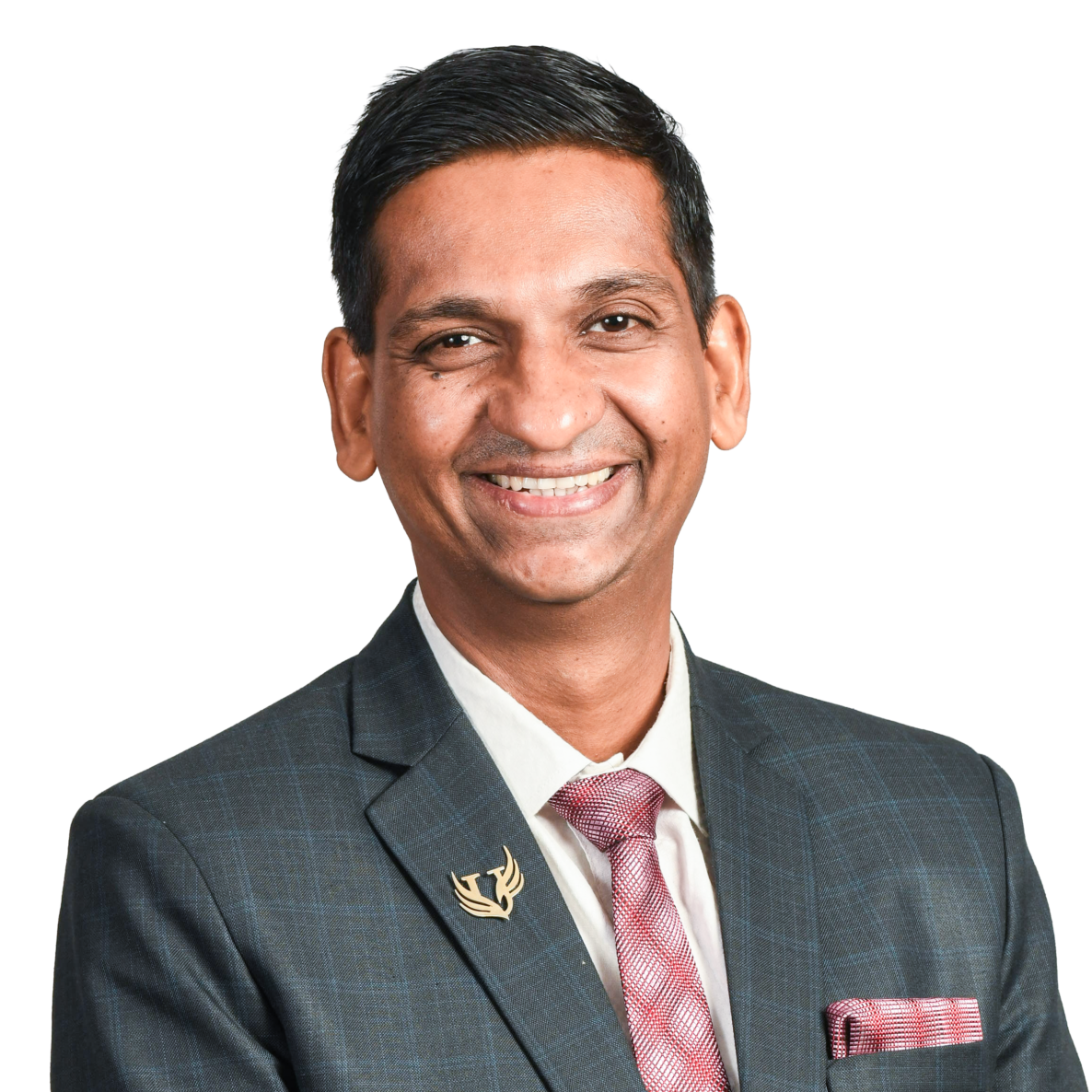
Alok Vijayvergiya

Alok Vijayvergiya

Group Chief Sustainability Officer, The Hinduja Group

Warsono

Warsono

Director of the Applied Solutions Center, Technology Institute of PLN

Dato Dr Munirah Looi

Dato' Dr. Munirah Looi

Regional CEO-SEA, BLUEONION

Marla Garin-Alvarez

Marla Garin-Alvarez

First Vice President and Head of Sustainability Office, BDO Unibank

Matthew Cowper

Matthew Cowper

Head of Business Operations APAC, Siemens Energy
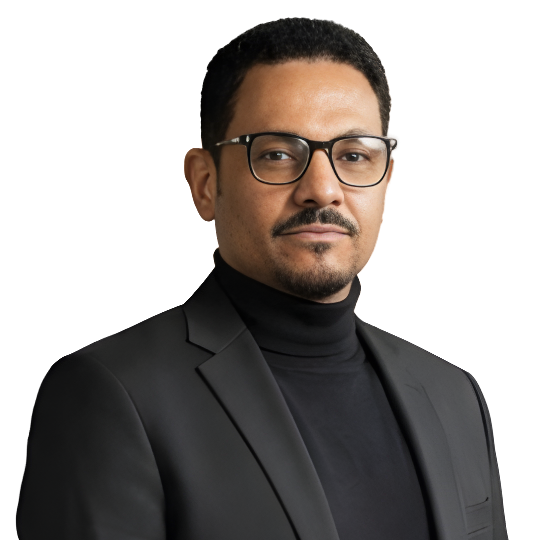
Dr. Ahmed Elidrisy

Dr. Ahmed Elidrisy

Chief Sustainability Officer

Joanna Chen

Joanna Chen

Director of Sustainability Operations (APAC Lead), JLL

Roy Heong

Roy Heong

Chief Sustainability Officer, Alliance Bank Malaysia Berhad

Kate Dundas

Kate Dundas

Executive Director, UN Global Compact Network Australia

Melissa V. Vergel de Dio

Melissa V. Vergel de Dios

Chief Sustainability Officer, PLDT & Smart

Maria Magallanes

Leah S. Magallanes

VP for Sustainability, Quality Assurance, and Food & Beverage, SM Hotels and Conventions Corp. (SMHCC)

Jason Ang

Jason Ang

Director Sustainability, Meranti Green Steel

Dr. Surina Ismail

Dr. Surina Ismail

Chief Sustainability Officer, Group Sustainability, IOI Corporation Berhad

Philip Ling

Philip Ling

Head of Sustainability, CelcomDigi Berhad Malaysia

Stefanie Braukmann

Stefanie Braukmann

Director, BCSD Malaysia
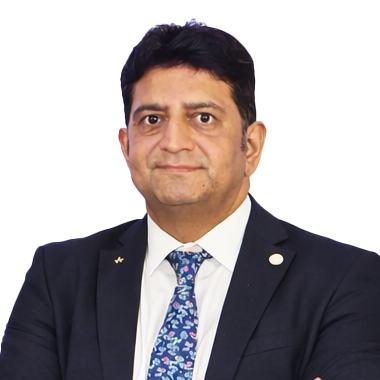
Ajay Sardana

Ajay Sardana

President and Head of Corporate Affairs, Nayara Energy

Farhana Jabir

Farhana Jabir

Director of Sustainability and Climate Change, PwC

Eleen Ooi

Eleen Ooi Yi Ling

Sustainability Practitioner, Former Head of Sustainability, Dutch Lady Milk Industries and AVP Group Sustainability, Bursa Malaysia

ENOCK EBBAH

Master Trainer

Dr. Enock Ebbah

The Sustainability Governance Architect for the C-Suite

Dr. Enock Ebbah is an award-winning Sustainability Governance Partner who helps Boards and C-Suite leaders navigate the complex gap between "Ambition" and "Action." Operating on the conviction that sustainability is no longer a technical challenge but a fiduciary one, Dr. Enock acts as a strategic "consigliere" to CSOs and Heads of ESG globally. He specializes in breaking through the "Implementation Wall"; aligning Finance, Operations, and Leadership to deliver net-zero strategies that protect commercial solvency and ensure regulatory resilience.

Holding a Doctor of Engineering (EngD) rooted in systems thinking, Dr. Enock brings over a decade of hands-on experience across energy and manufacturing sectors, including GHG reduction strategies at Calor Gas, tech innovators like Solar Polar, and circular innovation at ZibaHarvest. He is the creator of the proprietary SUSTAIN Framework and champion of the "Fee Neutrality" protocol, where operational efficiency funds the climate transition. Based in the UK and advising globally, he is the host of the Sustainability Transformations Podcast and author of the upcoming book The Accountability Mandate, bringing a forensic, case-study-led approach to the 2026 agenda.

Supporting Partners

Malaysian Green Technology and Climate Change Corporation

The Malaysian Green Technology and Climate Change Corporation (MGTC), under the Ministry of Natural Resources, Environment, and Climate Change, is on a mission to drive green lifestyle and climate action growth initiatives. Anchored by national policies and plans, MGTC conducts programs aligned with the National Green Technology Policy, National Policy on Climate Change, Green Technology Master Plan 2017-2030, and Twelfth Malaysia Plan. With aims to facilitate RM100 billion in green investments and create 230,000 green jobs by 2030, MGTC is in full support of Malaysia's journey towards net-zero GHG emissions.

Business Council for Sustainable Development (BCSD) Malaysia

BCSD Malaysia is the Malaysian chapter and Global Network Partner of the World Business Council for Sustainable Development (WBCSD). As an independent, CEO-led, membership-driven organization, BCSD Malaysia unites businesses dedicated to advancing sustainability, fostering collaboration to accelerate the transition toward a sustainable future. With a mission to make sustainable businesses more successful, the organization emphasizes raising awareness, facilitating knowledge sharing, and building capacity within the business community. Beyond advocacy, BCSD Malaysia provides a crucial platform for businesses to collaborate with key stakeholders to drive impactful sustainability initiatives at both local and global levels.

Visionary ESG Champions Awards

For Organizations:

  • ESG Leadership Award
    Recognising an organisation that demonstrates outstanding integration of Environmental, Social, and Governance (ESG) principles into their business strategy, operations, and culture — delivering measurable impact and long-term value.


  • Climate Action Award
    Awarding an organisation that has achieved significant progress in carbon reduction, climate resilience, and environmental stewardship through impactful climate initiatives and bold commitments.

For Individuals:

  • Sustainability Leadership Award
    Honouring an individual who has shown exceptional leadership, influence, and commitment in driving sustainability initiatives, shaping organisational culture, and advancing responsible business practices.


  • Innovation in ESG Award
    Recognising an individual who has pioneered innovative ideas, technologies, or solutions that accelerate ESG outcomes and push the boundaries of sustainable development.

Honourable Panel of Judges

Kate Dundas

Kate Dundas

Executive Director, UN Global Compact Network Australia
Dato Dr Munirah Looi

Dato' Dr. Munirah Looi

Regional CEO-SEA, BLUEONION

Dr. Ahmed Elidrisy

Dr. Ahmed Elidrisy

Chief Sustainability Officer

© 2026 Corporate World Intelligence. All Rights Reserved.

Privacy Policy
